The Problem
Pen, paper, and missed sales
Many small store owners in Ghana still manage inventory manually - notebooks, WhatsApp voice notes, mental tallies. This leads to over-ordering, running out of popular items, and an inability to generate any meaningful sales data. Existing inventory tools are either too complex (designed for enterprise) or require subscriptions that don't make sense for a single-person operation. There was a clear need for something lightweight, fast, and built for non-technical users.
The Solution
Four core task, one clear job
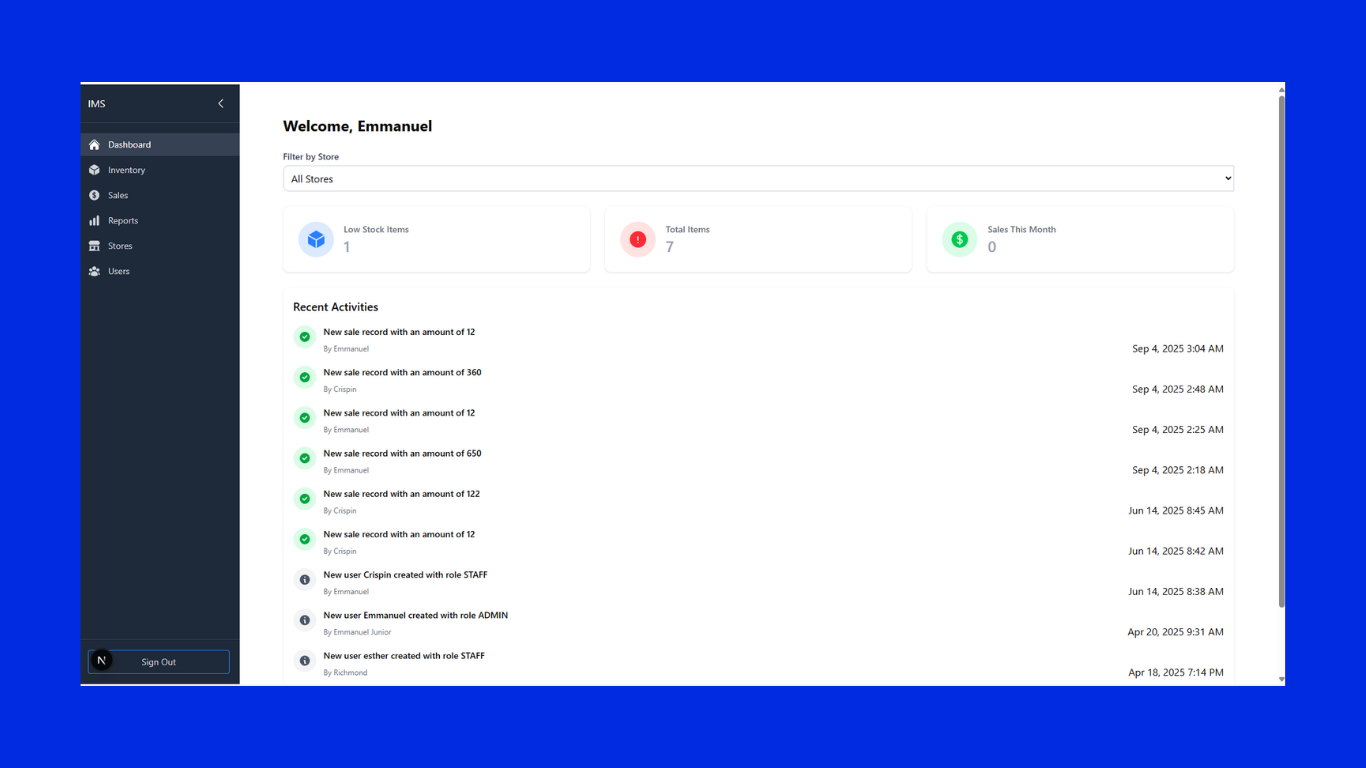
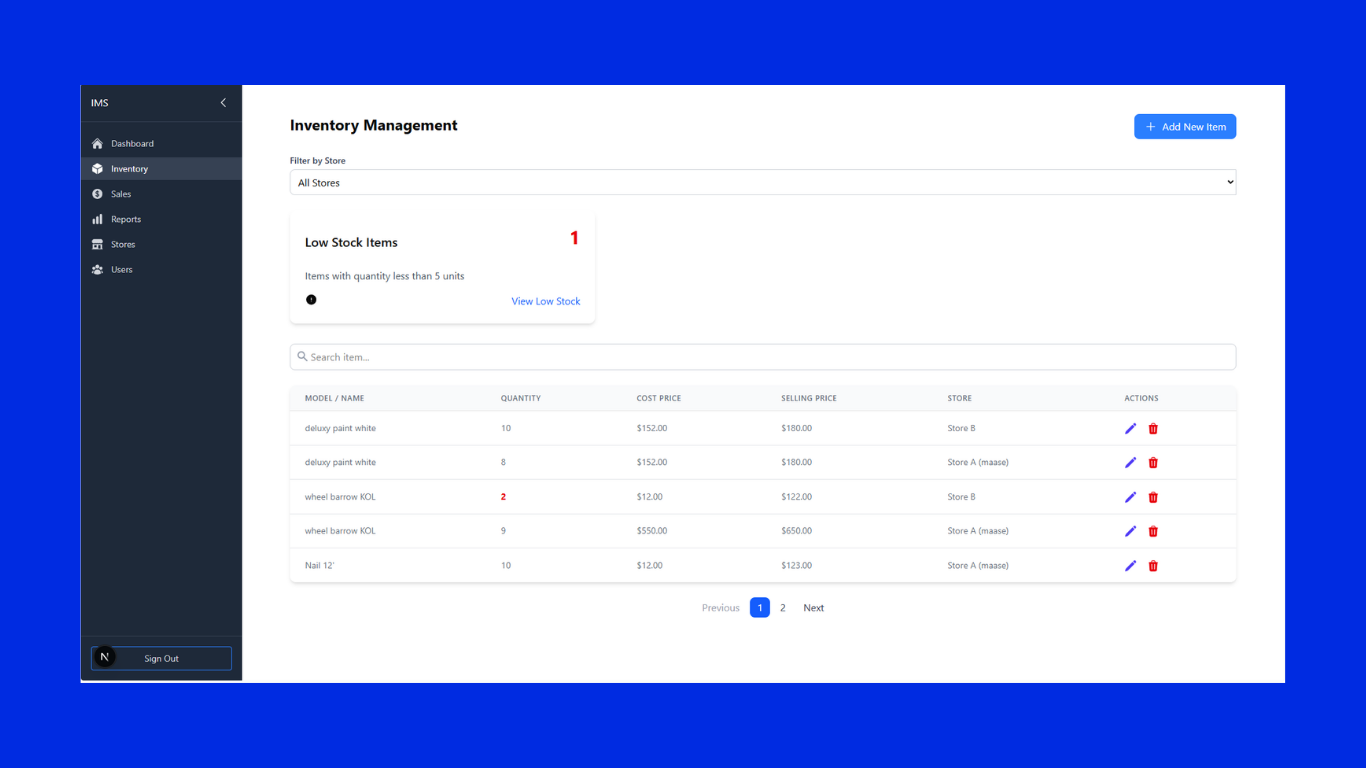
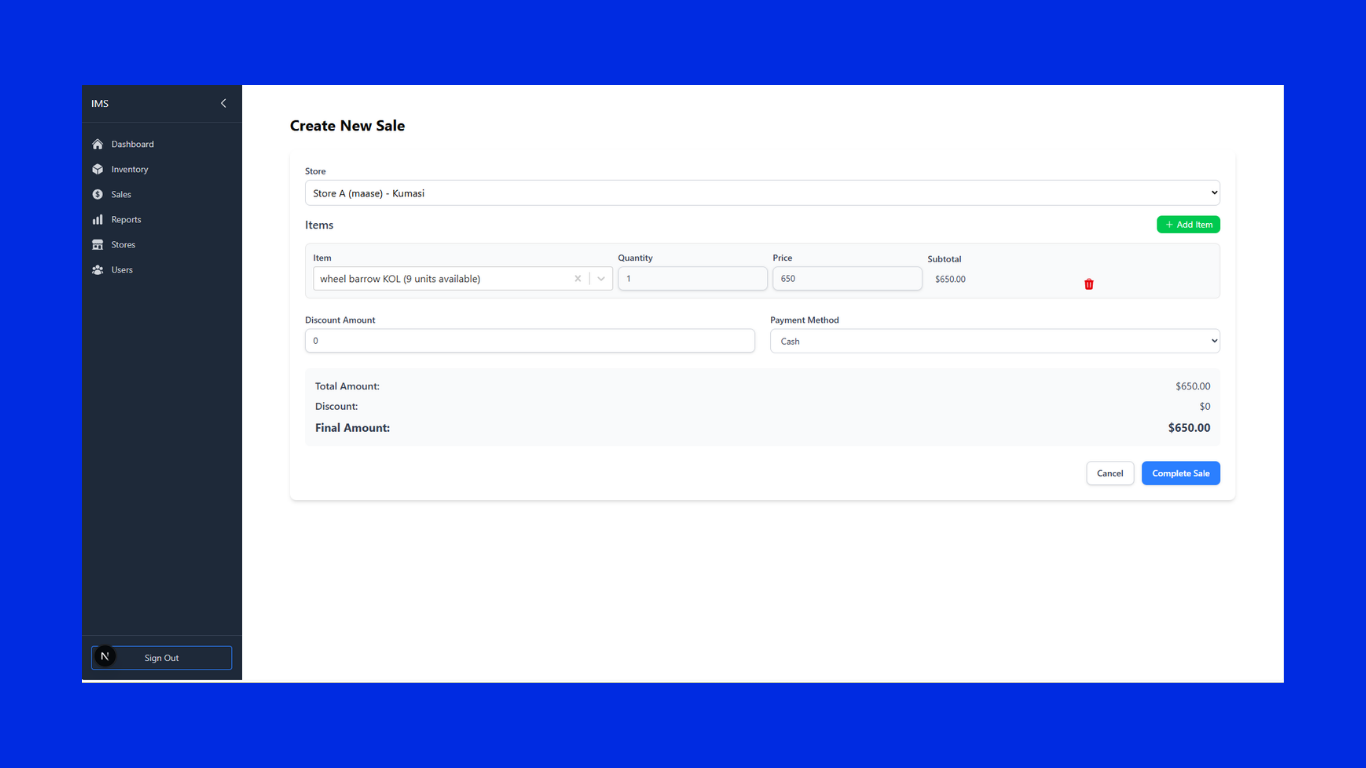
The system was built around the four core tasks a store owner needs to do every day: see what's in stock, add or update items, record a sale, and see what's running low. Everything else was addon. The UI was designed with large tap targets, clear status indicators, and minimal modal usage - actions happen inline wherever possible to reduce navigation depth. A colour-coded low-stock warning system surfaces critical items without requiring the user to search for them.
The Outcome
A tool that gets out of the way
The project reinforced a key principle: the best interface for a non-technical user is the one that requires the least explanation. Every design decision was tested against the question - "would a first-time user know what to do here?" It also strengthened React state management skills (tracking live stock changes across components) and reinforced accessible form design patterns.